

A leaking roof can quickly become a serious problem, particularly during heavy rainfall, strong winds or severe weather. Water entering your property can damage ceilings, plasterwork, insulation, flooring, electrical systems and personal belongings. Acting promptly can help minimise the damage while you wait for a professional roofing contractor to arrive.
Whether you live in a traditional terraced house, a modern property or a rural home, knowing what to do when a roof leak develops can make a significant difference. From containing water indoors to documenting the damage for insurance purposes, a few simple precautions can help protect your property until professional repairs are carried out.
In this guide, we explain the essential steps to take during a roof leak emergency, the mistakes to avoid and when to contact an emergency roofer.
What Should You Do First When Your Roof Starts Leaking?
When water begins entering your home, your first priorities should be safety, damage control and arranging professional assistance. Avoid rushing into repairs, particularly during adverse weather conditions.
Follow these practical steps to manage the situation safely.
1. Prioritise Safety and Avoid Climbing onto the Roof
Although you may be tempted to inspect the damage or cover the affected area yourself, climbing onto a wet or damaged roof is extremely dangerous. Slippery tiles, loose slates, unstable roof structures and strong winds can increase the risk of serious injury.
Leave all external inspections and repairs to trained roofing professionals who have the appropriate equipment and experience to work safely at height.
You should also take precautions inside your property. If water is entering near ceiling lights, electrical sockets or other electrical equipment, avoid touching the affected fittings. If it is safe to access your consumer unit without entering a wet area, switch off the electricity to the affected circuit or property. Otherwise, keep clear and contact a qualified electrician. If there is an immediate danger, evacuate the affected area and seek emergency assistance.
Never put yourself at risk to protect your property. Personal safety should always come before preventing water damage.
2. Contain the Water and Protect Your Belongings
Once the immediate safety risks have been addressed, focus on limiting the amount of water spreading through your home.
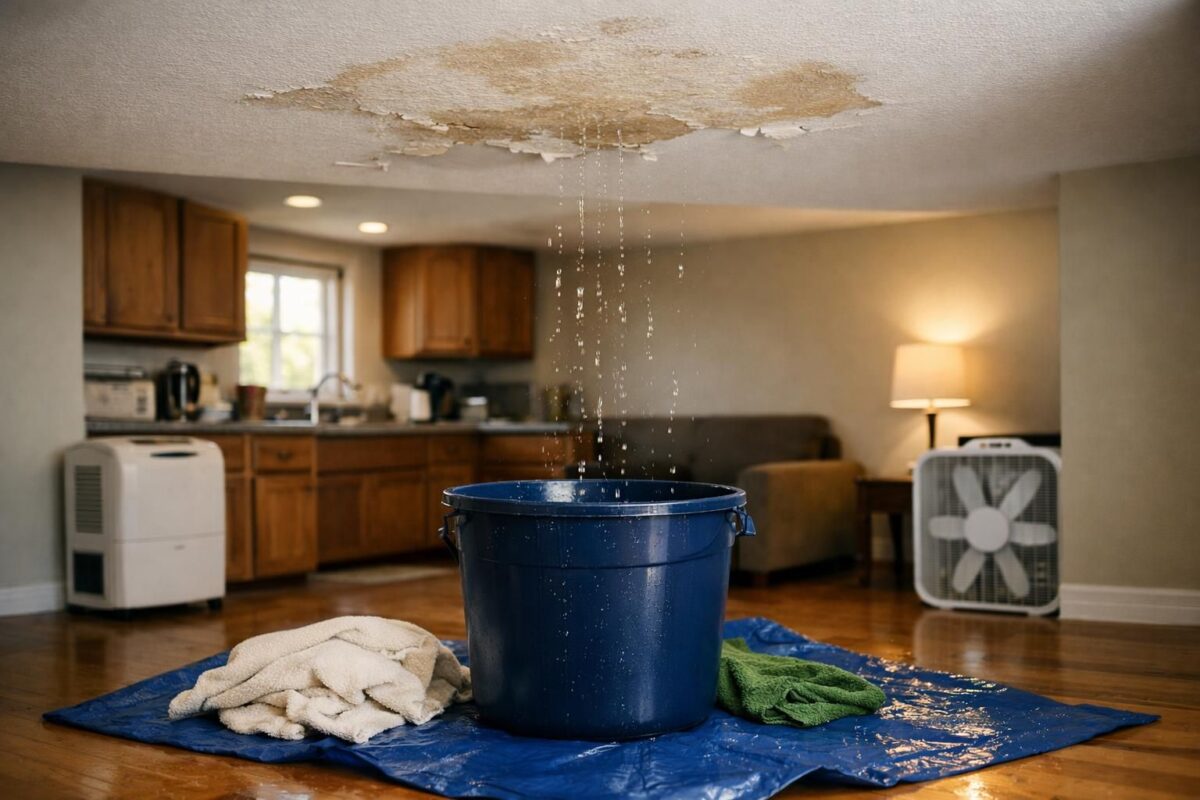
Place buckets, bowls or other suitable containers beneath active drips to collect the water. Use towels or absorbent materials to manage minor splashes and protect nearby flooring. Where appropriate, place plastic sheeting over furniture and other items that cannot easily be moved.
Move valuable belongings, electrical equipment, rugs and furniture away from the affected area. If water is entering an upstairs room, check whether it is spreading towards adjoining rooms or damaging stored possessions.
Pay particular attention to the loft, where leaking water can soak insulation, timber components and stored items before the problem becomes visible in the rooms below.
If you notice a bulging or sagging ceiling, keep everyone away from the area. A ceiling holding trapped water may collapse unexpectedly. Do not puncture it yourself; seek advice from a suitable professional who can assess the risk and arrange safe water removal.
3. Identify Possible Signs of Roof Damage from a Safe Position
You do not need to climb onto the roof to provide your roofer with useful information. A careful inspection from inside the property or ground level may help identify possible causes of the leak.
Common warning signs include:
- Missing or damaged roof tiles: Strong winds, falling branches and general deterioration can leave gaps in the roof covering.
- Damaged flashing: Loose or deteriorated flashing around chimneys, roof junctions and adjoining walls can allow rainwater to penetrate.
- Blocked or overflowing gutters: Leaves, debris and damaged guttering can prevent rainwater from draining away properly.
- Leaking roof windows or skylights: Worn seals, damaged flashing or defects around the frame can allow water inside.
- Deteriorating flat roof coverings: Cracks, splits, standing water or damaged joints may contribute to leaks.
- Water entering around chimneys or roof valleys: These areas are particularly vulnerable when joints, coverings or drainage routes deteriorate.
Remember that the point where water appears indoors may not be directly beneath the source of the leak. Water can travel along roof timbers, insulation and other building components before reaching the ceiling.
A professional roofer can investigate the underlying cause and recommend an appropriate repair.
4. Photograph the Damage for Your Insurance Records
If it is safe to do so, take photographs and videos of the affected rooms, visible water ingress and any damage that can be seen from ground level.
Useful evidence may include:
- Water dripping from ceilings or walls.
- Stained or damaged plasterwork.
- Wet flooring, carpets, furniture and personal possessions.
- Visible damage to roof coverings from a safe vantage point.
- The date and approximate time the leak was first noticed.
Make a note of the weather conditions and whether the leak becomes worse during heavy rainfall or strong winds. This information can help your roofing contractor understand the circumstances surrounding the problem.
If you intend to make a home insurance claim, contact your insurer as soon as reasonably possible and follow its instructions. Keep records of emergency work, invoices and any temporary measures taken to prevent further damage.
Do not delay urgent action needed to protect people or prevent additional damage while waiting for an insurer’s response. However, where practical, document the damage before moving or disposing of affected items.
5. Contact an Emergency Roofer as Soon as Possible
A roof leak may appear minor initially but can worsen if water continues entering the property. Prompt professional attention can help identify the cause, limit further water ingress and determine whether temporary protection or a permanent repair is required.
When contacting a roofing contractor, explain the situation as clearly as possible. Useful details include:
- Whether water is actively entering the property.
- Which rooms or areas are affected.
- Whether the leak started during heavy rain or strong winds.
- Whether you have noticed missing tiles, damaged flashing or overflowing gutters.
- Whether water is entering near electrical fittings or a sagging ceiling.
Photographs taken safely from indoors or ground level can also help the contractor assess the situation before arriving.
Depending on the cause and severity, the roofer may recommend temporary weatherproofing, replacing damaged tiles, repairing flashing, addressing drainage problems or carrying out more extensive roof repairs.
If the roof has suffered significant storm damage, temporary protection may be necessary before permanent work can begin. Ask the contractor to explain the proposed measures and whether a follow-up visit will be required.
6. Avoid DIY Repairs That Could Make the Problem Worse
When water is entering your home, it is understandable to want to stop the leak immediately. However, improvised repairs can create additional problems or make the original damage more difficult to assess.
Avoid climbing ladders during wet or windy weather, applying sealant to an unknown leak source or attempting to replace tiles without appropriate training and safety equipment.
Adhesive tape and household sealants are rarely suitable substitutes for a properly diagnosed roofing repair. Covering the wrong area may also allow water to continue entering elsewhere.
Instead, concentrate on safe internal measures, protecting belongings and arranging professional help. If temporary protection is needed on the roof itself, a qualified contractor can determine the safest and most appropriate approach.
7. Reduce the Risk of Further Water Damage
While waiting for the roofer, continue monitoring the affected area from a safe position. Empty water containers carefully before they overflow and move additional belongings if the leak spreads.
Where it is safe, improve ventilation after the immediate leak has been controlled to help damp areas dry. Avoid using electrical fans or other appliances in wet areas and do not disturb water-damaged electrical installations.
Wet insulation, plasterboard and flooring may need professional assessment, particularly if they have been saturated for an extended period. Prompt drying can help reduce the risk of mould growth and further deterioration.
Once the immediate problem has been resolved, arrange any necessary follow-up work to repair damaged internal finishes and assess hidden moisture.
What Causes Emergency Roof Leaks in UK Homes?
Roof leaks can occur in properties of all ages and styles throughout the UK. While heavy rain and storms often expose existing weaknesses, leaks can also develop gradually as roofing materials deteriorate.
Common causes include:
Storm damage: Strong winds can dislodge tiles, damage ridge coverings and loosen flashing. Falling branches may also damage roof coverings.
Ageing roof materials: Roof tiles, slates, felt, membranes and associated components can deteriorate over time, increasing the likelihood of water ingress.
Poor drainage: Blocked gutters and downpipes can prevent rainwater from draining away correctly, potentially allowing water to penetrate vulnerable areas.
Defective flashing and roof junctions: Chimneys, valleys, abutments and roof windows rely on correctly installed and maintained details to keep water out.
Flat roof deterioration: Cracked coverings, failed seams, damaged edges and persistent standing water can contribute to leaks.
Previous poor-quality repairs: Inadequate workmanship or unsuitable repair materials may fail to address the original problem.
Regular roof inspections and routine maintenance can help identify developing issues before they turn into emergencies. Clearing accessible gutters safely, checking for visible damage from ground level and arranging professional inspections when concerns arise can all contribute to better roof maintenance.
How Can You Prevent Future Roof Leaks?
Although it is not possible to eliminate every risk, preventative maintenance can reduce the likelihood of unexpected roofing problems.
Consider the following measures:
- Arrange periodic roof inspections, particularly if your roof is older or has experienced storm damage.
- Keep gutters and downpipes clear so rainwater can drain away effectively.
- Investigate damp patches, ceiling stains and unexplained musty smells promptly.
- Repair loose tiles, deteriorating flashing and damaged roof coverings before the next spell of severe weather.
- Check flat roofs, roof windows and roof junctions as part of your maintenance routine.
- Use experienced roofing contractors for repairs and replacement work.
The appropriate inspection frequency will depend on the roof type, its condition, the surrounding environment and exposure to severe weather. A roofing professional can advise on a suitable maintenance schedule for your property.
When Should You Treat a Roof Leak as an Emergency?
Not every roof leak requires the same level of urgency, but certain warning signs demand immediate attention.
Seek urgent professional assistance if water is entering rapidly, a large section of the ceiling is sagging, storm damage has exposed the roof structure or water is spreading through several rooms.
Electrical hazards, structural instability and falling ceiling materials require particular caution. Keep people away from dangerous areas and contact the relevant emergency services if there is an immediate threat to life or safety.
Even a slow drip should not be ignored. Persistent water ingress can damage insulation, internal finishes and structural components, potentially leading to more extensive repairs.
Protect Your Property with Prompt Roofing Repairs
A leaking roof can be disruptive, but taking the right steps while waiting for professional assistance can help limit the damage. Prioritise safety, contain water indoors, protect valuable belongings, document the affected areas and contact a suitable roofing contractor promptly.
Avoid attempting dangerous external repairs yourself and make sure the underlying cause is identified rather than simply covering up the visible symptoms. Once the immediate leak has been controlled, arrange any necessary permanent repairs and internal drying work.
For homeowners looking for professional roofing advice and repair solutions, Cambridge Roof Works can be a useful point of contact for roofing-related enquiries. Addressing roof damage promptly and maintaining your roof regularly can help protect your property against the UK’s changing weather conditions and reduce the risk of future leaks.
Add a stronger Cambridge Roof Works call to actionReduce repetition across safety sections
