

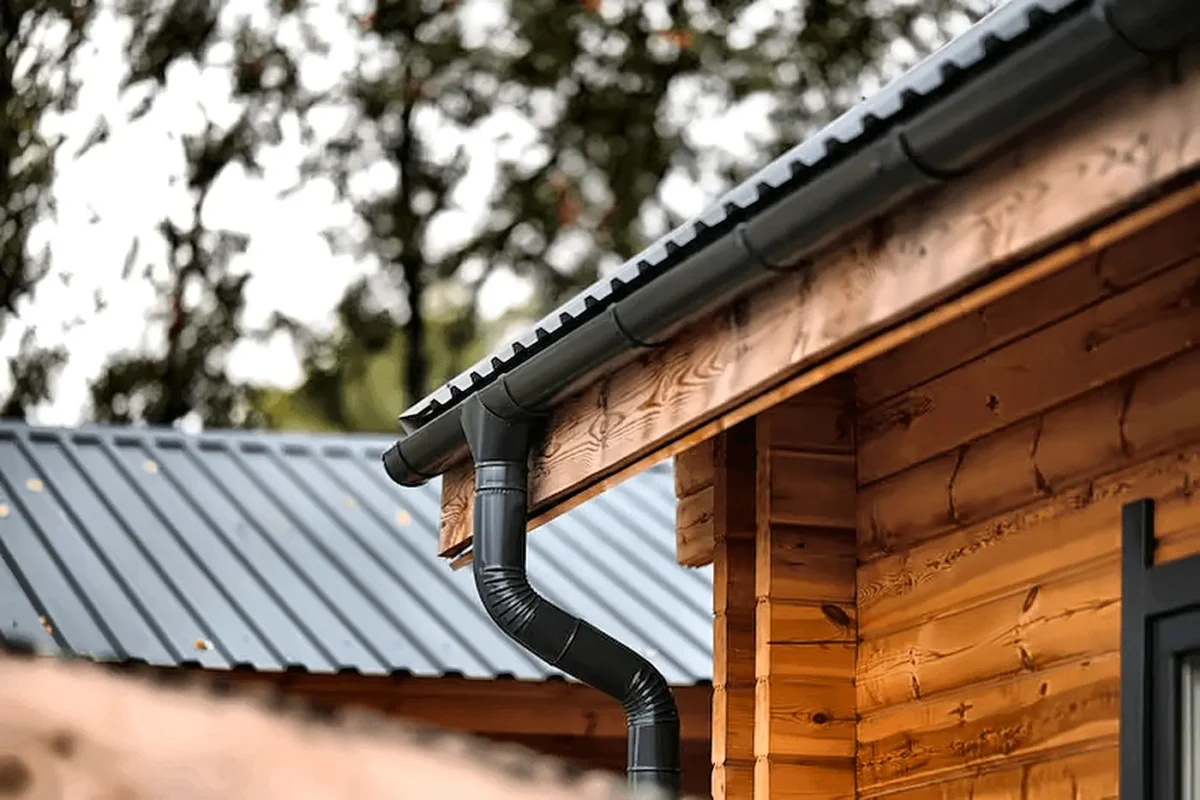
Rainwater goods are an essential part of any roofing system, yet gutters, downpipes and roof outlets can sometimes be treated as a secondary detail during construction. Poor coordination between roofing, drainage and building contractors can lead to water ingress, overflowing gutters, damaged walls and costly remedial work.
For new-build homes, extensions and larger construction projects across the UK, rainwater goods should be considered from the design stage. Correct positioning, adequate falls, suitable outlet capacity and secure fixings all contribute to a roofing system that performs reliably throughout its service life.
Why Rainwater Goods Matter to a Roofing Project
A roof does more than protect a property from the weather. It must also collect and direct rainwater safely away from the building.
Gutters collect water running from the roof, while outlets and downpipes transfer it into the appropriate drainage system. If any part of this arrangement is incorrectly designed or installed, water can accumulate or discharge against areas of the building where it can cause damage.
Common problems include:
- Gutters with insufficient falls
- Incorrectly positioned downpipes
- Inadequate outlet capacity
- Poorly spaced gutter brackets
- Incorrect connections to drainage systems
- Water overflowing during heavy rainfall
- Downpipes discharging too close to walls or foundations
- Blockages caused by leaves and debris
- Poor coordination between roofing and drainage contractors
These issues may appear relatively minor during construction but can become significant maintenance or warranty problems after a property is occupied.
Coordinating Roofing, Gutters and Drainage
Rainwater goods often sit between several different elements of a construction project. The roofing contractor may be responsible for installing the gutters and outlets, while a drainage contractor installs the below-ground connections. Other trades may be responsible for the external walls, fascias or other areas where the rainwater system is fixed.
This makes coordination particularly important.
Before installation begins, contractors should confirm where gutters will run, where outlets will be positioned and how downpipes will connect to the drainage system. The design should also consider the size and pitch of the roof, expected rainfall and the location of outlets.
Resolving these details before work starts can prevent situations where a downpipe has to be moved, a gutter requires modification or drainage connections do not align with the finished roof.
Getting Gutter Falls Right
Gutters need sufficient gradient to allow rainwater to flow towards the outlets rather than remaining stagnant within the system.
The required fall will depend on the gutter system, manufacturer specifications and project design. Longer gutter runs require particular attention because the overall change in level can become significant.
A poorly calculated fall can result in:
- Standing water inside gutters
- Slow drainage
- Increased risk of blockages
- Overflow during heavy rainfall
- Additional stress on gutter brackets
- Premature deterioration of components
The finished gutter also needs to sit correctly in relation to the roof covering and fascia. Setting out the system accurately before installation helps ensure both effective drainage and a neat appearance.
Choosing the Right Number and Position of Outlets
Outlet positioning is another important part of rainwater system design.
A roof with a large catchment area may require more than one outlet to handle the volume of water generated during periods of heavy rainfall. Simply installing one outlet at the end of a long gutter run may not provide adequate drainage capacity.
The design should take account of the roof area draining into each gutter, the size of the gutter and downpipe, and the expected rainfall conditions.
Outlets should also be coordinated with the drainage layout below ground. A correctly positioned roof outlet is of little benefit if the downpipe cannot connect efficiently to the drainage system.
Gutter Fixings and Bracket Spacing
The performance of a gutter system depends not only on its size and position but also on how securely it is fixed.
Bracket spacing should follow the requirements of the particular gutter system and the conditions of the building. Wind exposure, roof configuration and local weather conditions can all influence the fixing requirements.
If brackets are spaced too far apart, gutters can sag or move under the weight of water. During periods of severe weather, poorly secured components may also be more vulnerable to movement or damage.
Using the correct fixings and installing them into suitable structural points helps provide a more durable installation.
Planning for the UK Climate
Rainwater management is particularly important in the UK because properties can experience prolonged periods of rainfall as well as short periods of intense downpours.
Roof drainage systems should therefore be designed with appropriate capacity rather than simply being installed as an afterthought.
Designers and contractors should consider:
- Roof size and pitch
- Gutter capacity
- Downpipe diameter
- Number and position of outlets
- Local exposure conditions
- Connection to surface water drainage
- Access for future maintenance
- Potential for leaves and debris to accumulate
A well-designed system should continue to perform effectively during both everyday rainfall and periods of heavier weather.
Dealing with Leaves and Debris
Properties surrounded by mature trees may require additional consideration.
Leaves, moss and other debris can collect inside gutters and eventually restrict the flow of rainwater. If water cannot reach the outlet efficiently, it may overflow onto fascias, walls or other parts of the building.
Depending on the property and surrounding environment, suitable gutter protection or a planned maintenance regime may help reduce the risk.
It is better to identify these requirements during the design process rather than waiting until the property develops drainage problems.
What Developers and Contractors Should Check
For developers, quantity surveyors and project managers, rainwater goods should be included within the wider roofing and drainage coordination process.
Before work begins, it is worth checking:
- Has the gutter layout been clearly established?
- Are gutter falls suitable for the proposed system?
- Is the number of outlets adequate?
- Do downpipe positions align with the drainage design?
- Are the correct brackets and fixings specified?
- Have exposure conditions been considered?
- Can the completed system be accessed for maintenance?
- Are areas with heavy leaf fall being addressed?
- Have roofing and drainage contractors agreed on their respective responsibilities?
Clear coordination at this stage can help avoid expensive changes once the roof and external finishes are complete.
The Importance of Professional Roofing Coordination
Rainwater goods may represent only one part of a roofing project, but their performance can have a major impact on the building as a whole. Incorrectly managed rainwater can contribute to damp, staining, damaged masonry and deterioration of external finishes.
Professional roofing contractors should therefore consider gutters, outlets and downpipes as an integral part of the roof design rather than a separate finishing detail.
For homeowners, developers and property professionals looking at roofing work, Cambridge Roofworks can be a useful point of reference when considering professional roofing services and the importance of properly planned roof drainage.
Conclusion
Effective rainwater management starts with good coordination. Gutters, outlets and downpipes need to work together with the roof structure, external walls and drainage system to safely remove rainwater from the property.
By addressing gutter falls, outlet capacity, fixing requirements and drainage connections during the design and construction stages, UK property owners and developers can reduce the risk of water-related defects and improve the long-term performance of the roofing system.
Rainwater goods should not be treated as an afterthought. They are a fundamental part of a reliable, durable and properly coordinated roof.
