

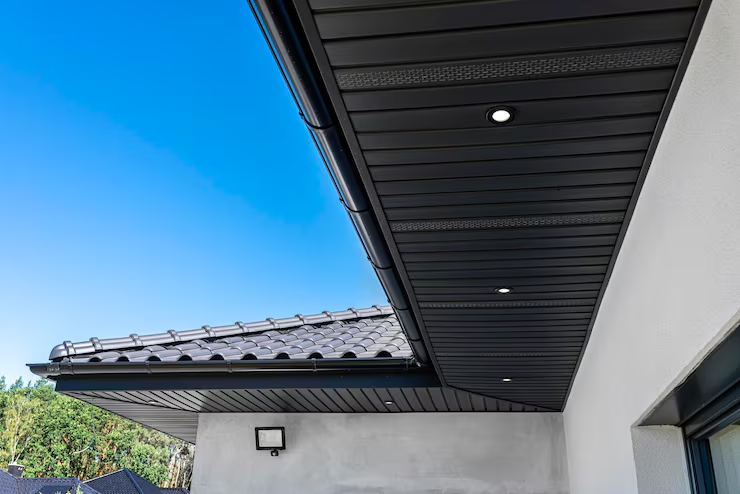
The roof is one of the most important parts of any property, but protecting the roof and walls involves more than the tiles or roofing membrane alone. Fascias and soffits form an important part of the roofline, helping protect the edges of the roof while contributing to the property’s appearance and supporting effective ventilation and rainwater management.
Over time, exposure to rain, wind, frost, sunlight and changing temperatures can cause roofline components to deteriorate. Cracks, warping, rot, staining and loose sections can affect both the appearance and performance of a property.
Whether you own a house, manage a rental property or look after a commercial building, understanding the purpose of fascias and soffits can help you recognise potential problems and arrange maintenance before more extensive repairs are needed.
What Are Fascias and Soffits?
Although fascias and soffits are often mentioned together, they perform different functions.
What Is a Fascia?
A fascia board is the horizontal board fixed along the lower edge of a roof. It is usually positioned behind the guttering and provides a finished edge to the roofline.
Fascias can help:
- Support guttering
- Protect the roof edge
- Shield roof timbers from weather exposure
- Create a neat transition between the roof and exterior walls
- Contribute to the overall appearance of the property
If a fascia becomes damaged or deteriorates, it can affect the condition of the surrounding roofline and guttering system.
What Is a Soffit?
A soffit is the underside section of the roof overhang, positioned beneath the fascia.
Soffits help protect the underside of the roof structure from weather exposure and can also incorporate ventilation openings. Adequate roof ventilation is important because trapped moisture can contribute to condensation and deterioration within the roof space.
Soffits are available in a range of materials, colours and styles, allowing them to complement different types of UK properties.
Why Are Fascias and Soffits Important?
Fascias and soffits may look like relatively small details, but they form an important part of a property’s roofline.
A properly maintained roofline can help protect vulnerable roof edges from rain and other weather conditions. Fascias can also provide support for guttering, while suitably designed soffits can contribute to ventilation.
Neglected roofline components can develop problems that extend beyond their appearance. For example, damaged fascia boards may affect gutter stability, while deteriorated soffits can leave areas of the roof edge exposed.
Regular inspection and maintenance can therefore help identify issues at an earlier stage.
Common Signs Your Fascias and Soffits Need Attention
Knowing what to look for can help property owners identify roofline problems before they become more serious.
1. Rot or Soft Timber
Traditional timber fascias and soffits can deteriorate when repeatedly exposed to moisture.
Soft, crumbling or visibly rotten sections may indicate that replacement or repair is required.
2. Cracks and Splits
Cracks can develop through weather exposure, age, impact or movement.
Small defects should not necessarily be ignored, particularly where water can enter behind the roofline.
3. Peeling Paint
Paint that is blistering, flaking or peeling may indicate that moisture has affected the underlying material.
For timber roofline components, this can be an early indication of deterioration.
4. Warping or Distortion
Fascias and soffits should generally maintain their intended shape. Bowing, warping or distorted sections may indicate deterioration or movement.
5. Loose or Sagging Guttering
Because guttering is commonly fixed to the fascia, damaged fascia boards can contribute to problems with gutter alignment or stability.
If gutters are pulling away from the roofline or sagging, the fascia should also be checked.
6. Water Staining
Staining around the roofline can be associated with leaking or overflowing gutters, defective flashing or other water-related problems.
The source should be investigated rather than simply covering the visible stain.
7. Damaged or Missing Soffit Sections
Gaps, holes or loose soffit panels can leave parts of the roof edge exposed and may affect the appearance and protection of the property.
What Causes Fascia and Soffit Damage?
UK properties are exposed to a wide range of weather conditions throughout the year. Rain, wind, frost and temperature fluctuations can all contribute to gradual roofline deterioration.
Common causes include:
- Persistent moisture
- Blocked or overflowing gutters
- Poor ventilation
- Age-related deterioration
- Storm damage
- Incorrect installation
- Inadequate maintenance
- Pest or bird activity
- Repeated freeze-thaw cycles
In many cases, several factors contribute to deterioration rather than a single cause.
Timber vs uPVC Fascias and Soffits
When replacing roofline components, homeowners often consider timber and uPVC.
Timber Fascias and Soffits
Timber can suit traditional, period and character properties and can be painted in a wide range of colours.
However, timber requires ongoing maintenance. Painting and treating exposed areas can help protect the material, while damaged sections may eventually require repair or replacement.
uPVC Fascias and Soffits
uPVC roofline systems are widely used because they are generally low-maintenance and available in a variety of colours and profiles.
They do not require the same routine painting as timber and can provide a practical option for many modern and traditional properties.
The appropriate choice depends on factors including the building’s design, existing roofline, aesthetic requirements, budget and maintenance expectations.
Should You Repair or Replace Fascias and Soffits?
The answer depends on the extent and cause of the damage.
Repair May Be Suitable When:
- Damage is limited to a small area
- The underlying material remains sound
- Fixings have become loose
- Minor cosmetic deterioration can be addressed
- The problem has not affected surrounding roof components
Replacement May Be More Appropriate When:
- Timber is extensively rotten
- Large sections are cracked or warped
- Roofline components are repeatedly failing
- Guttering can no longer be securely supported
- There is widespread deterioration
- Previous repairs have only provided a temporary solution
A professional inspection can help establish whether repair or replacement is the more practical long-term option.
How Does Fascia and Soffit Replacement Work?
The exact installation process varies according to the property and roofline system, but a typical project may involve several stages.
Step 1: Roofline Inspection
The existing fascias, soffits, guttering and associated components are assessed to determine their condition.
Step 2: Identifying the Cause of Damage
Where deterioration has occurred, it is important to establish why. For example, leaking or overflowing gutters may need attention alongside fascia replacement.
Step 3: Removing Damaged Components
Old or defective sections are carefully removed where replacement is required.
Step 4: Checking the Underlying Structure
The supporting roofline and timberwork should be checked for signs of moisture damage or deterioration.
Step 5: Installing New Fascias and Soffits
New components are installed and securely fixed according to the requirements of the chosen roofline system.
Step 6: Guttering and Finishing
Guttering and other roofline components can then be reinstated, replaced or adjusted where necessary.
The finished roofline should provide a clean appearance while performing its intended protective and drainage functions.
How Long Do Fascias and Soffits Last?
There is no single lifespan that applies to every fascia and soffit system.
Durability depends on:
- Material
- Installation quality
- Exposure to weather
- Maintenance
- Roof design
- Guttering performance
- Local environmental conditions
uPVC systems are generally selected for their low-maintenance characteristics, while timber can remain in good condition for many years when properly maintained.
Regular inspections can help identify deterioration before replacement becomes urgent.
How Much Does Fascia and Soffit Replacement Cost in the UK?
The cost of replacing fascias and soffits varies from property to property.
Factors that can affect the overall price include:
- Size of the property
- Total roofline length
- Material selected
- Number of storeys
- Access requirements
- Condition of existing roofline components
- Whether guttering is also replaced
- Amount of repair required to underlying timber
- Design and profile of the new roofline
A small repair will naturally have different costs from a complete roofline replacement.
For an accurate price, it is best to arrange an assessment and obtain a detailed quotation based on the property’s specific requirements.
Do Fascias and Soffits Need Ventilation?
Soffits can incorporate ventilation as part of the roof’s ventilation strategy.
Adequate ventilation can help reduce the risk of condensation and moisture accumulation within roof spaces. However, ventilation requirements vary according to the roof construction and design.
Replacing soffits should therefore not involve simply blocking existing ventilation without considering how the roof space is intended to be ventilated.
If condensation or dampness is already present, the underlying cause should be investigated.
Fascias, Soffits and Guttering: How Do They Work Together?
Fascias, soffits and guttering are closely connected parts of the roofline.
The fascia provides a fixing point for many guttering systems, while the soffit helps protect the underside of the roof edge. Guttering collects rainwater and directs it away from the building.
If one component is damaged, it can affect the others.
For example, blocked gutters can overflow and repeatedly expose fascia boards to water. This may accelerate deterioration, particularly with timber.
Maintaining the complete roofline rather than focusing on individual components can therefore help protect the property more effectively.
Can Damaged Fascias and Soffits Cause Damp?
Damaged roofline components do not automatically cause damp, but they can contribute to moisture-related problems in some circumstances.
Defective guttering, overflowing rainwater and damaged roofline sections can allow water to reach areas that should remain protected.
However, damp can have many different causes, including leaks, condensation, defective pointing, plumbing problems and ground moisture.
If damp is present, the source should be professionally investigated rather than assuming the roofline is responsible.
How to Maintain Fascias and Soffits
Regular maintenance can help extend the service life of roofline components.
Useful maintenance measures include:
- Inspecting the roofline periodically
- Keeping gutters clear of leaves and debris
- Checking for cracks and loose sections
- Looking for signs of rot or staining
- Checking gutter fixings
- Keeping roofline ventilation clear
- Repairing minor defects before they worsen
- Arranging professional inspections where damage is difficult to assess safely
It is particularly useful to inspect the roofline after periods of severe weather.
Are New Fascias and Soffits Worth It?
Replacing deteriorated fascias and soffits can improve both the appearance and functionality of a property’s roofline.
New roofline components can provide:
- Improved weather protection
- Better support for suitable guttering systems
- Reduced maintenance requirements, depending on the material
- A cleaner exterior appearance
- Replacement of damaged or deteriorated sections
- An opportunity to address underlying roofline issues
The benefits will depend on the condition of the existing roofline and the quality of the replacement work.
Choosing a Fascia and Soffit Installer
Choosing an experienced installer is important because roofline work involves more than simply attaching new boards.
When comparing contractors, consider:
- Experience with the type of property
- Previous roofline projects
- Materials and systems offered
- Installation methods
- Whether guttering is included where required
- Whether the underlying roofline is inspected
- Insurance and relevant qualifications
- Clear written quotations
- Guarantees or warranties offered
A good installer should explain the work required rather than recommending unnecessary replacement.
Final Thoughts on Fascias and Soffits
Fascias and soffits play an important role in protecting and finishing the roofline of a UK property. Although they are often overlooked, damaged or poorly maintained roofline components can contribute to problems involving water ingress, guttering, ventilation and the condition of the roof edge.
Regular inspections can help identify early signs of deterioration, including rot, cracking, warping, staining and loose sections.
Where damage is extensive, replacing the roofline may provide a more practical long-term solution than repeatedly repairing individual areas. Choosing between timber, uPVC and other materials will depend on the property’s requirements, appearance, maintenance expectations and budget.
Whether you are maintaining a traditional home, modern house, rental property or commercial building, keeping the fascias, soffits and guttering in good condition is an important part of wider property maintenance.
Frequently Asked Questions
What is the difference between fascias and soffits?
Fascias are generally the boards running along the lower edge of the roof, while soffits are positioned underneath the roof overhang. Both form part of the property’s roofline but perform different functions.
How do I know if my fascias need replacing?
Signs can include rot, cracks, warping, peeling paint, water staining, loose sections and guttering that is pulling away from the roofline.
Are uPVC fascias better than timber?
Both materials have different characteristics. uPVC is commonly chosen for its low-maintenance properties, while timber can be particularly suitable for traditional or period properties and can be painted to suit the building.
How often should fascias and soffits be inspected?
There is no universal inspection interval, but checking the roofline periodically and after severe weather can help identify developing problems.
Can new fascias support new guttering?
Fascias are commonly used to provide support or fixing points for guttering, but the appropriate installation method depends on the roofline and guttering system.
Do soffits need ventilation?
Some roof constructions require ventilation at the roof edge. The appropriate ventilation provision depends on the design and construction of the roof.
Can I replace fascias without replacing soffits?
In some cases, yes. The decision depends on the condition and construction of the existing roofline. A professional assessment can determine which components actually require replacement.
How long does fascia and soffit replacement take?
The duration depends on the size and design of the property, the condition of the existing roofline, access requirements and whether guttering or other components are being replaced at the same time.
Should fascias and soffits be replaced before selling a property?
There is no requirement to replace them simply because a property is being sold. However, addressing visible deterioration can improve the property’s condition and resolve potential maintenance concerns before marketing.
