
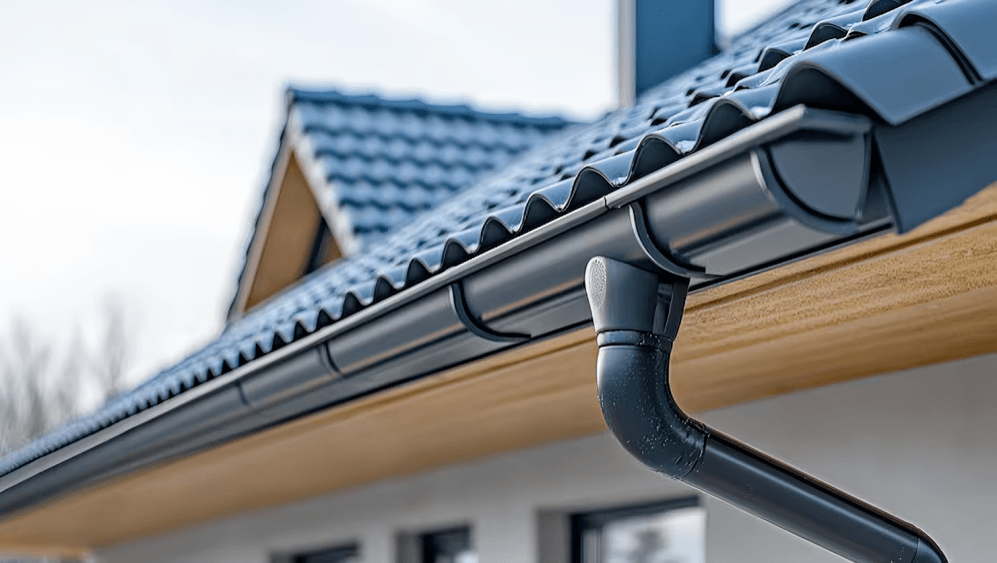
Guttering plays an essential role in protecting a home from rainwater. A well-designed and properly installed gutter system collects water from the roof and directs it safely away from walls, windows, doors and foundations. Without effective rainwater management, overflowing or leaking gutters can contribute to damp, staining, erosion and more serious structural problems over time.
With different materials, profiles and sizes available, choosing the right guttering is not simply a matter of appearance. UK homeowners should consider the property’s design, roof size, local weather conditions, maintenance requirements, expected lifespan and overall budget.
Two of the most widely used guttering materials are uPVC and steel, while half-round and square profiles remain popular choices for residential properties. Understanding the differences between them can make it easier to select a system that offers the right combination of performance, durability and appearance.
Why Good Guttering Matters
The UK’s changeable weather means residential guttering needs to cope with regular rainfall throughout the year. During periods of heavy rain, gutters must be capable of collecting significant volumes of water and directing it towards suitable downpipes without overflowing.
Effective guttering can help:
- Protect external walls from excessive water exposure
- Reduce the risk of damp and staining
- Prevent water from pooling around foundations
- Protect windows, doors and other openings
- Reduce soil erosion around the property
- Prevent rainwater from damaging landscaping
- Improve the overall appearance of the roofline
Guttering is therefore an important part of a property’s wider drainage and weatherproofing system.
uPVC Guttering: Affordable and Low Maintenance
uPVC guttering is one of the most common choices for UK residential properties. It has been widely used for decades because it is lightweight, relatively inexpensive and straightforward to install.
One of its biggest advantages is affordability. For homeowners working within a defined renovation budget, uPVC can provide reliable rainwater management without the higher initial cost associated with many metal systems.
Key benefits of uPVC guttering
- Cost-effective: Generally cheaper to purchase and install than steel.
- Lightweight: Easier to transport, handle and install.
- Low maintenance: Does not require regular painting or specialist treatment.
- Corrosion resistant: Unlike some traditional metals, uPVC does not rust.
- Wide choice of colours: Common options include black, white, brown and grey.
- Easy to replace: Individual sections and fittings can usually be replaced without changing the entire system.
uPVC is particularly suitable for many standard residential properties, extensions, garages, outbuildings and smaller roof structures.
What are the drawbacks?
uPVC is not completely maintenance-free. It still needs periodic cleaning and inspection, particularly where trees overhang the roof.
It also expands and contracts more noticeably with temperature changes than metal guttering. This means the system needs correctly positioned expansion joints and suitable installation allowances. Poor installation can result in movement, distortion or joints becoming compromised over time.
For properties exposed to particularly demanding weather conditions, homeowners may also prefer a stronger metal system.
Steel Guttering: Durable and Long Lasting
Steel guttering provides a more robust alternative to uPVC and is increasingly considered by homeowners looking for long-term performance and a premium appearance.
Modern coated steel systems are designed to resist corrosion and withstand exposure to the UK’s changing weather conditions. With appropriate installation and maintenance, quality steel guttering can have a considerably longer service life than many standard plastic systems.
Advantages of steel guttering
- Excellent durability: Well-maintained steel systems can provide decades of service.
- Strong and rigid: Less susceptible to movement or deformation than plastic.
- Weather resistant: Suitable for exposed locations and demanding conditions.
- Premium appearance: Creates a clean and substantial finish around the roofline.
- Suitable for traditional and modern properties: Different finishes and profiles can complement a wide range of architectural styles.
- Long-term value: Its extended lifespan can make the higher initial investment worthwhile.
Steel can be particularly attractive for larger homes, period properties and properties located in exposed or coastal areas.
Is steel guttering more expensive?
Generally, yes. Steel guttering typically has a higher upfront cost than uPVC, particularly when installation and specialist components are taken into account.
However, the initial price should be considered alongside the expected lifespan. A system that lasts significantly longer may offer better long-term value, even if the initial investment is greater.
Half-Round Guttering: A Classic Choice
Half-round guttering features a traditional curved profile and remains one of the most recognisable gutter styles in the UK.
Its simple shape allows rainwater to flow efficiently through the gutter while making the system relatively straightforward to clean. The absence of sharp internal corners can also make it easier to remove leaves and other debris.
Half-round guttering works particularly well with:
- Traditional houses
- Cottages
- Period properties
- Detached and semi-detached homes
- Classic brick properties
- Heritage-inspired renovations
It is available in both uPVC and steel, allowing homeowners to combine the traditional appearance of the profile with their preferred material.
For homes with moderate roof areas and conventional drainage requirements, half-round guttering can provide an effective balance between appearance and performance.
Square Guttering: Modern Appearance and Greater Capacity
Square guttering has a more angular design and is often chosen for contemporary homes or properties where a sharper roofline appearance is preferred.
Its shape can provide greater water-carrying capacity than some smaller traditional profiles, making it worth considering for properties with larger roof areas or higher rainwater requirements.
Square guttering can complement:
- Modern houses
- New-build properties
- Contemporary extensions
- Flat or angular architectural designs
- Larger roof areas
Like half-round systems, square guttering is available in both uPVC and steel.
One consideration is that the corners and flatter sections of square profiles can provide places for leaves and debris to accumulate. Regular inspection and cleaning are therefore important, particularly for homes surrounded by mature trees.
Half-Round vs Square Guttering
The best profile depends on both the appearance and drainage requirements of your property.
| Feature | Half-Round | Square |
| Appearance | Traditional and rounded | Modern and angular |
| Suitable for | Period and traditional homes | Contemporary properties |
| Water flow | Efficient | High capacity |
| Cleaning | Generally straightforward | May collect debris in corners |
| Materials | uPVC and steel | uPVC and steel |
| Design flexibility | Classic appearance | Contemporary appearance |
Neither profile is automatically better. The right choice depends on the roof design, required capacity and architectural character of the property.
uPVC vs Steel: Which Is Better?
There is no universal answer because each material has different strengths.
Choose uPVC if you prioritise:
- A lower initial cost
- Lightweight components
- Simple installation
- Low maintenance
- A wide range of colours
Consider steel if you prioritise:
- Long-term durability
- Greater structural strength
- A premium finish
- Performance in exposed locations
- A longer expected service life
For many homeowners, uPVC represents the practical and economical option, while steel can be a worthwhile investment for properties where durability, appearance and longevity are particularly important.
Consider Your Local Weather Conditions
Although the UK does not experience the same weather everywhere, heavy rainfall can occur across the country. Homes in areas that regularly experience intense rainfall or are exposed to strong winds may benefit from a more robust guttering system.
Coastal properties may also need additional consideration because salt-laden air can accelerate corrosion in unsuitable metal products. Choosing a properly coated and corrosion-resistant steel system can help improve long-term performance.
The size and pitch of the roof should also be considered. A larger roof collects more rainwater, increasing the demands placed on the guttering and downpipes.
Guttering Size and Water Capacity
Choosing the correct profile is only part of the decision. Guttering must also have sufficient capacity for the roof area it serves.
A larger roof may require a higher-capacity gutter and appropriately sized downpipes to prevent water from backing up or overflowing during heavy rainfall.
The number and position of downpipes are also important. Even a high-capacity gutter can perform poorly if the rainwater does not have an efficient route away from the roof.
For more complex roofs, extensions or large properties, professional assessment can help determine the appropriate gutter and downpipe configuration.
Installation Matters as Much as the Material
Even the highest-quality guttering can fail to perform properly if it is poorly installed.
Correct installation should account for:
- Appropriate gutter falls
- Correct bracket spacing
- Expansion and contraction
- Secure joints
- Correctly positioned outlets
- Suitable downpipe capacity
- Roof edge and fascia compatibility
- Safe discharge of rainwater
uPVC systems require particular attention to thermal movement, while metal systems need appropriate fixings and protection against corrosion.
Professional installation can help ensure the system works effectively and reduces the likelihood of premature repairs.
Maintaining Your Guttering
Regardless of the material or profile you choose, regular maintenance is essential.
At least periodically, homeowners should check for:
- Leaves and debris
- Blocked outlets
- Cracked or damaged sections
- Loose brackets
- Leaking joints
- Sagging gutters
- Overflow marks
- Damaged downpipes
- Vegetation growing inside the gutter
Properties surrounded by trees may need more frequent cleaning, particularly during autumn.
Addressing small problems early can prevent water from overflowing and causing more expensive damage to walls, fascias, soffits and foundations.
How to Choose the Right Guttering for Your Home
When comparing gutter systems, consider the bigger picture rather than focusing solely on the initial purchase price.
Think about:
Property style: Traditional homes may suit half-round profiles, while square systems can complement contemporary architecture.
Roof size: Larger roofs may require higher-capacity gutters and additional downpipes.
Location: Exposed, coastal or high-rainfall areas may benefit from more durable materials.
Budget: uPVC generally offers a lower initial investment, while steel can provide greater longevity.
Maintenance: All guttering requires cleaning and inspection, but some systems may be more resistant to damage and environmental exposure.
Lifespan: Consider how long you expect to remain in the property and whether investing more initially could reduce replacement costs later.
Final Thoughts
Choosing guttering for a UK home involves more than selecting a colour or profile. The system needs to manage rainwater effectively while complementing the property’s appearance and coping with the local environment.
uPVC remains a practical and cost-effective choice for many homes, particularly where affordability and ease of installation are priorities. Steel offers greater durability and a premium finish, making it an attractive option for homeowners looking for a longer-term investment.
When it comes to profiles, half-round guttering provides a timeless appearance that works particularly well with traditional properties, while square guttering offers a contemporary look and can provide greater water capacity.
Ultimately, the best guttering system is one that matches your property’s roof design, drainage requirements, architectural style, budget and long-term maintenance expectations. Choosing the right combination of material, profile, capacity and professional installation can help protect your home from rainwater and keep the roofline performing effectively for years to come.
