
Roof inspections are an important part of maintaining any residential, commercial or industrial property. However, accessing a roof can be difficult, expensive and potentially hazardous, particularly on large, high or complex buildings.
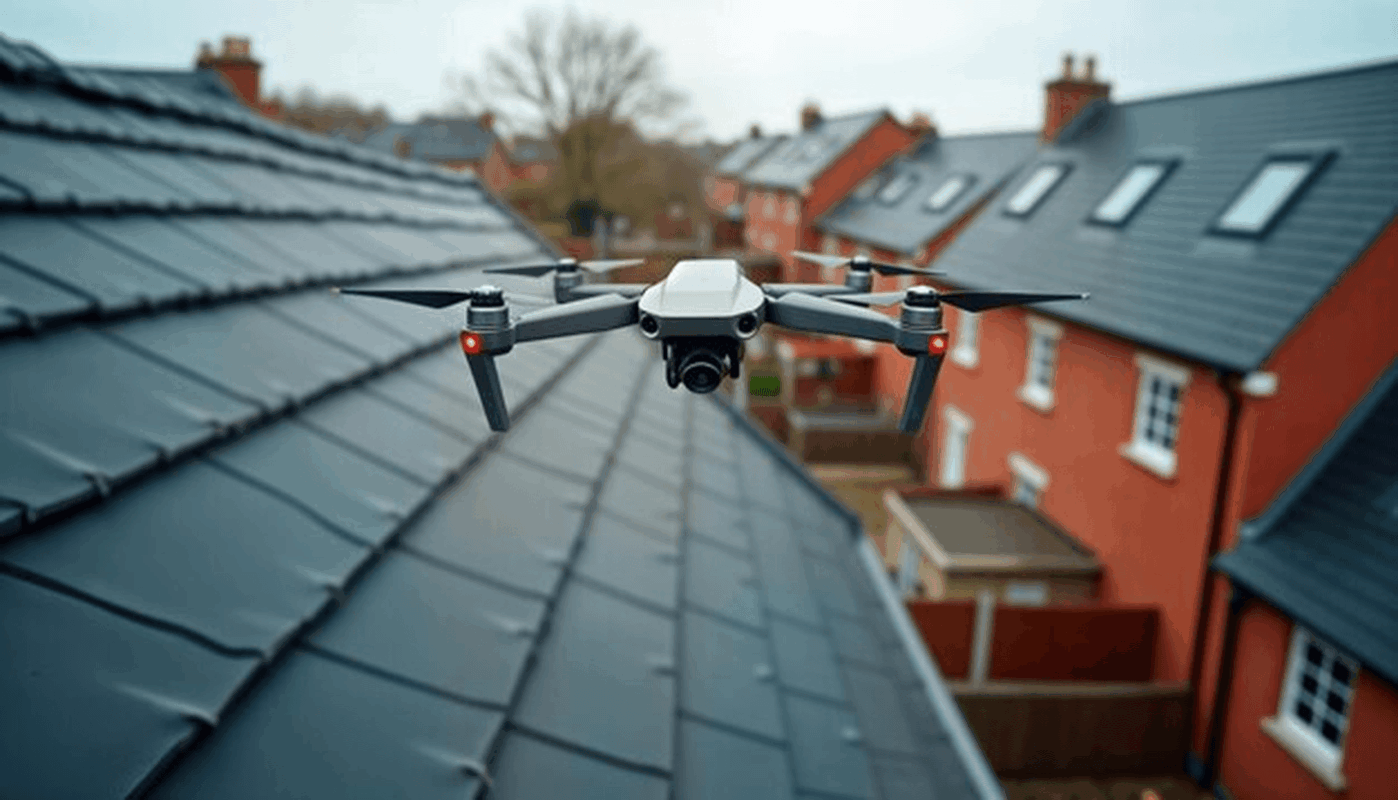
A drone roof survey provides a practical alternative for many inspection requirements. Using a high-resolution camera mounted on a remotely piloted aircraft, trained operators can capture detailed images and video of roof areas from the ground without requiring immediate physical access to the roof.
For property owners, landlords, facilities managers, surveyors and building professionals across the UK, drone technology can make it easier to identify visible roof defects, document the condition of a building and decide whether further investigation or repair is required.
This guide explains what a drone roof survey involves, the benefits it can provide, what it can identify and the important UK regulations that operators need to consider.
What Is a Drone Roof Survey?
A drone roof survey is a visual inspection of a roof carried out using a drone equipped with a camera. The drone can fly around and above suitable areas of a building, capturing high-resolution photographs and video of roof coverings and associated components.
Depending on the equipment used and the purpose of the inspection, a survey may provide imagery of:
- Roof tiles and slates
- Flat roofing systems
- Ridge and hip tiles
- Chimneys
- Flashings
- Valleys
- Rooflights
- Gutters and downpipes
- Fascias and soffits
- Solar panels
- Roof-mounted equipment
- Areas of apparent damage or deterioration
The resulting images can then be reviewed to identify visible issues and create a photographic record of the roof’s condition.
A drone survey is primarily a visual inspection. It does not automatically replace a hands-on roof inspection, structural assessment or specialist investigation where physical access or testing is required.
Why Use a Drone for Roof Inspections?
Traditional roof inspections can involve ladders, scaffolding, mobile access platforms or other access equipment. Depending on the property, these methods may take additional time to arrange and can increase costs and disruption.
Drone surveys can provide an alternative first-stage inspection where appropriate.
1. Improved Access to Difficult Areas
Some roofs are difficult to inspect from ground level. This can include tall buildings, large commercial premises, warehouses, extensions and properties with complicated roof designs.
A drone can capture imagery of areas that may otherwise be difficult to view safely from the ground.
2. Reduced Need for Immediate Work at Height
One of the key advantages is that an initial visual assessment can often be completed without putting an inspector onto the roof.
This can be particularly useful when assessing areas that may be unsafe, fragile or difficult to access. However, the drone operator must still comply with applicable aviation and safety requirements.
3. Detailed Visual Evidence
Modern drones can capture high-resolution photographs and video, providing a useful record of roof condition.
Images can help property owners and professionals identify visible issues such as missing roof coverings, damaged tiles, deteriorated flashing, blocked gutters or apparent storm damage.
4. Faster Initial Assessments
A drone can survey many accessible roof areas relatively quickly compared with arranging extensive access equipment.
This can make drone surveys useful for initial inspections, maintenance planning and identifying areas that require closer examination.
5. Useful for Large Commercial Properties
Commercial and industrial buildings often have extensive roof areas that can be difficult to inspect efficiently.
Warehouses, offices, retail premises, schools, agricultural buildings and industrial units may all benefit from aerial imagery where the operation can be carried out safely and legally.
6. A Record for Maintenance Planning
Photographs and survey reports can provide a useful baseline for future inspections.
Property managers can compare imagery over time to monitor visible changes and help plan maintenance before minor problems develop into more significant issues.
What Can a Drone Roof Survey Identify?
A drone survey can reveal a range of visible roof problems, although the exact findings depend on the camera, weather, roof design and quality of the inspection.
Potential issues include:
Missing or Damaged Roof Tiles
High-resolution imagery can help identify missing, cracked, slipped or damaged tiles and slates.
Damaged Flashings
Flashing around chimneys, roof junctions and other areas can sometimes be inspected visually from the air.
Blocked or Damaged Gutters
Aerial imagery can provide a useful view of gutters and roof drainage systems, helping identify visible blockages, vegetation or damage.
Roof Wear and Deterioration
Signs of ageing, weathering and general deterioration may be visible from drone imagery.
Storm Damage
After periods of severe weather, a drone survey can provide an efficient way to assess a roof for obvious external damage before deciding whether closer inspection is required.
Rooflight Problems
Commercial and industrial roofs may incorporate rooflights that can be difficult to inspect from ground level. Drone imagery can help identify visible damage or deterioration.
Solar Panel and Roof-Mounted Equipment
Drones can also be useful for visually inspecting solar panels and other equipment installed on roofs, subject to the limitations of the equipment and survey.
What a Drone Roof Survey Cannot Tell You
It is important not to treat a drone survey as a complete substitute for every type of roof inspection.
A drone primarily provides visual information. It may not establish:
- The condition of concealed roof structures
- The condition beneath roof coverings
- Moisture levels within roofing materials
- Structural integrity that requires physical testing
- The condition of inaccessible internal components
- Whether a roof covering is securely fixed where this cannot be established visually
- The precise cause of a leak in every situation
If the aerial inspection identifies a potential problem, a roofer, surveyor, structural engineer or other suitably qualified professional may need to carry out further investigation.
How Does a Drone Roof Survey Work?
Although the exact process varies between providers, a professional drone roof inspection typically follows several stages.
1. Initial Assessment
The operator establishes the purpose and scope of the survey and considers the building, surrounding area, roof design and potential flight restrictions.
2. Flight Planning
The proposed flight is assessed in relation to people, buildings, roads, airspace and other relevant factors.
The UK Civil Aviation Authority sets requirements for drone operations, including rules concerning aircraft weight, operating category, proximity to people and where drones can be flown.
3. Aerial Inspection
The drone is flown by a competent operator who captures photographs and/or video of the relevant roof areas.
Depending on the requirements, specialist equipment may also be used to collect additional information.
4. Image Review
The captured imagery is examined for visible defects, areas of deterioration and other conditions relevant to the survey.
5. Reporting
The client may receive photographs, video footage and a written report explaining the findings.
Where defects are identified, the report can help determine whether further inspection or remedial work is required.
Are Drone Roof Surveys Safe?
One of the major advantages of using a drone is that it can reduce the need for people to immediately access difficult roof areas.
However, drone operations themselves must be carefully managed. A drone is an aircraft and operators must comply with UK aviation rules.
The CAA states that organisations using drones for work must ensure they are appropriately registered, that remote pilots have the necessary competency and that any required operational authorisations and insurance are in place.
This means property owners should use a suitably competent and compliant operator rather than treating a drone roof survey as a simple photography service.
What Are the UK Rules for Commercial Drone Roof Surveys?
Drone operations in the UK are regulated by the Civil Aviation Authority (CAA).
The requirements depend on factors including the drone being used, its weight, where it is flown and the nature of the operation. The CAA categorises operations into Open, Specific and Certified categories.
